September 16, 2026
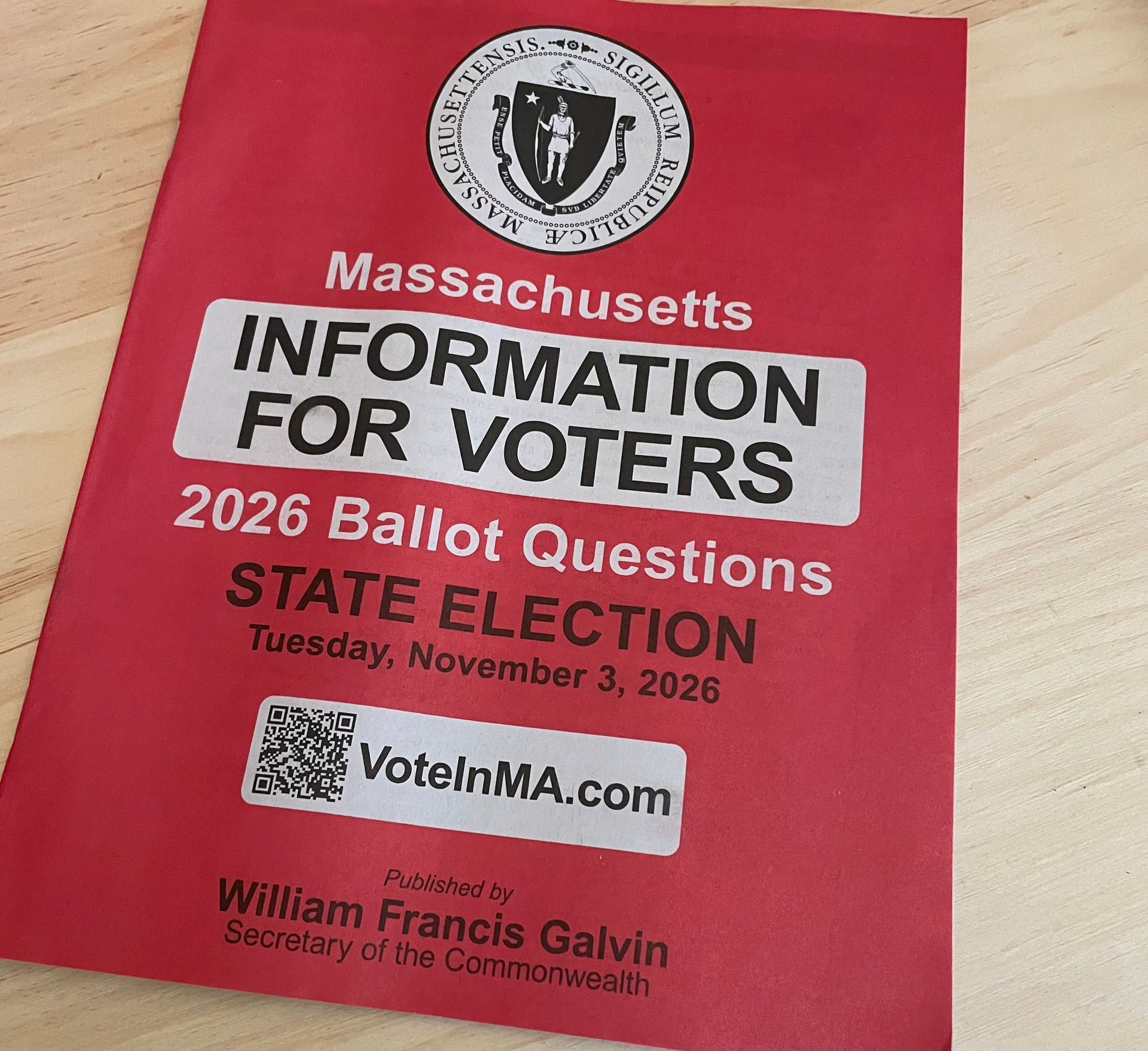
Learn about the ballot questions In addition to voting for elected officials, this fall Massachusetts voters are being asked to vote “yes” or “no” on a whopping nine ballot questions . In past years, there were just three or four, so we want you to be prepared for what will be a multi-page ballot. Key Sources of Information MA Secretary of the Commonwealth's Election Division - You should have recently received a red "Information for Voters" booklet in the mail, but if not, there are hard copies available at most public libraries and it’s also available online . In addition to the exact wording of the nine questions, this booklet contains arguments for and against each one, plus the full text of the proposed or existing laws. CommonWealth Beacon (CWB) - WB is a nonprofit, nonpartisan news source focused on Massachusetts policy, politics and civic life. It just released Election 2026: MA Ballot Questions Explained , which includes what supporters and opponents are saying about each ballot question, along with historical context and links to their earlier articles on the topic. Tufts University’s Center for State Policy Analysis - Tufts’ CSPA recently released its Voters Guide to 2026 MA Ballot Questions . It provides summaries (~400 words) and longer reports (3-5 pages) for each question. Make a Plan to Vote In the coming weeks, you will undoubtedly see multitudes of lawn signs and receive postcards, emails, and phone calls about individual questions. We hope these resources help you learn about the ballot questions and that you VOTE THIS FALL! Register to Vote by Oct 24, Update Address, Name, or Party Check Your Voter Registration Status Where do I vote? Vote in-person Early voting: Oct 17-30 (times & locations vary by city/town; details available by Oct 9 Election Day: Nov 3, 2026, 7am-8pm Vote by mail (Deadline to request to vote by mail is Oct 27, 2026). Vote Yes on #7 and #9 PHIWM is taking a position on two questions most directly associated with our work to advance health equity in Western MA. We encourage you to vote YES on #7 (Legalize starter homes) and YES on #9 (Keep our gun safety laws). Vote Yes on 7 to Legalize Starter Homes In Western MA, the cost of safe, quality housing continues to climb, and the goal of home ownership is out of reach for more and more people. For this reason, PHIWM endorses ballot question #7 to help make it possible for to build smaller, more affordable homes on smaller, more affordable lots. Passing this ballot question would allow single-family homes to be built in residentially zoned area if the lot has: at least 5,000 square feet (about the size of an NBA basketball court); at least 50 feet of land bordering the street, and access to public sewer and water services. By contrast, many municipalities currently require lots to be 2x, 4x, even 10x larger than 5,000 square feet to build one home. Legalizing starter homes in Massachusetts will result in smaller homes, more affordable homes, and more homes in general. Learn more about question #7 . Vote Yes on 9 For a Safer Massachusetts In 2024, Massachusetts passed its strongest gun safety law in a decade, cracking down on ghost guns and modernizing safety regulations. Now the gun lobby wants to overturn that law with a repeal referendum on the November 2026 ballot. While the death rate by firearms in MA is lower than most states , there is still too much violence and too many suicides due to easy access to guns. PHIWM endorses ballot question #9 so that we can keep the strong gun laws that Massachusetts voters want to save lives. Learn more about question #9 .